

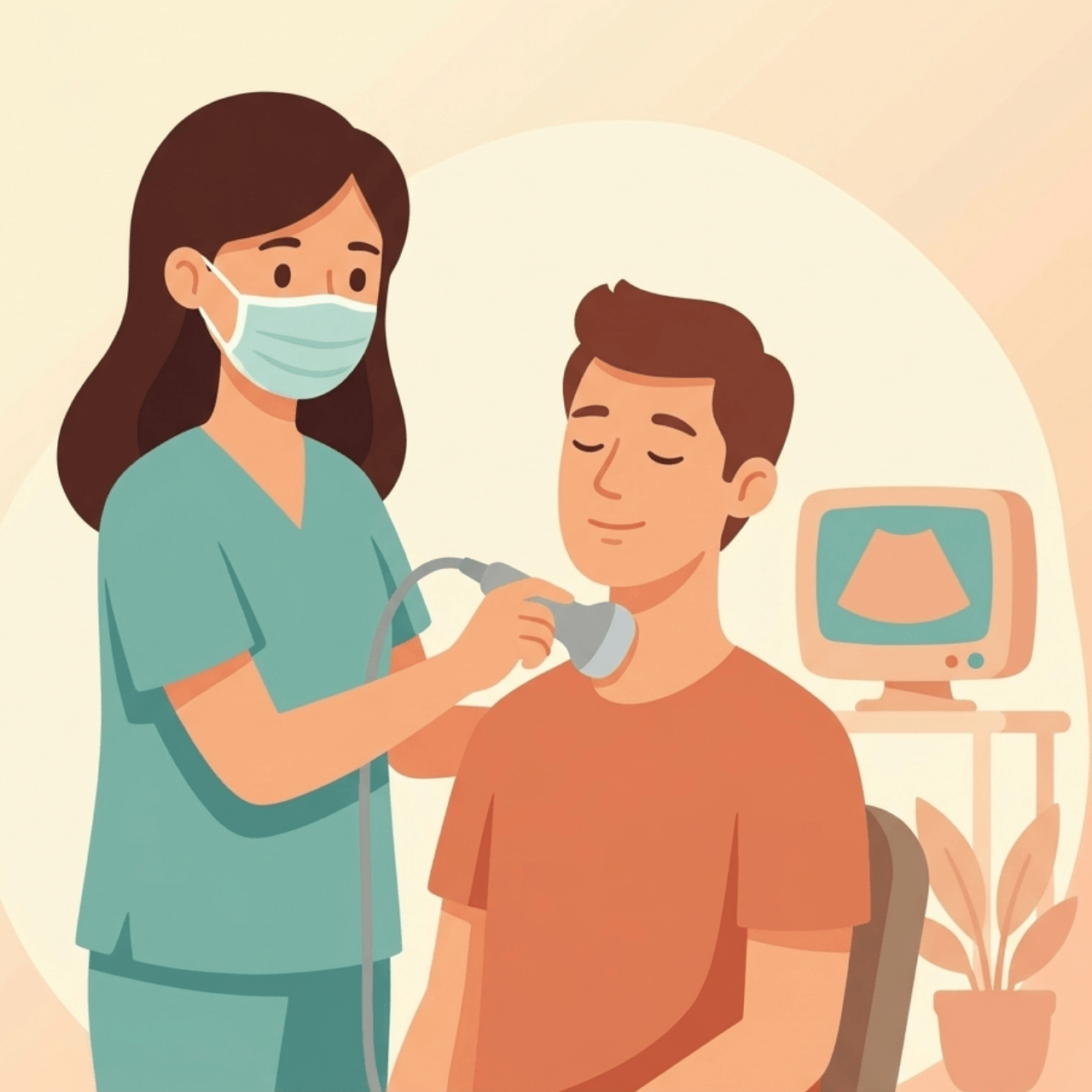
If you have parosmia after COVID-19, where familiar smells have become distorted or unpleasant, you may have come across a procedure called stellate ganglion block, or SGB. A randomised clinical trial has now tested whether it works. Here is what the research found.
What is stellate ganglion block?
The stellate ganglion is a bundle of nerves in the neck that forms part of the body’s autonomic nervous system. Doctors have suggested that injecting a local anaesthetic around these nerves might reset abnormal nerve activity thought to contribute to long COVID symptoms, including smell disorders. Early case reports suggested it might help, but it had not been tested in a rigorous clinical trial until now.
How the study was designed
48 adults who had experienced COVID-related parosmia for at least six months took part. They were randomly assigned to receive either a real SGB injection containing a local anaesthetic, or a placebo injection containing saline solution. Neither the participants nor the researchers assessing outcomes knew who had received which treatment. Improvement was measured using a specialist questionnaire called the DisODOR scale, which tracks how parosmia affects daily life.
What the results showed
SGB did not work better than placebo. After three months, 43% of participants who received the real treatment reported meaningful improvement, but so did 38% of those who received the placebo. The difference was too small to be meaningful.
One of the most notable findings was a strong placebo effect. Many participants improved regardless of which injection they received. This suggests that natural recovery, expectations, or fluctuations in symptoms may play an important role in how parosmia changes over time, and it is a reminder that parosmia can improve even without a specific treatment.
The procedure was generally safe. Minor temporary side effects included hoarseness, nasal congestion, dizziness, and headache.
What this means if you have parosmia
The researchers concluded that SGB should not be recommended as a treatment for COVID-related parosmia. If you were hoping this might be an option, that is a disappointing finding, and it is reasonable to feel let down.
What the study does reinforce, however, is that parosmia can get better. Nearly 40% of participants in both groups saw meaningful improvement over just three months. Recovery is not guaranteed for everyone, but it does happen, often gradually and without any specific intervention.
If you would like to understand more about managing parosmia day to day, the CKOS guide Parosmia: understanding it and helping yourself covers practical strategies and what the research currently tells us.
Key Takeaway
A carefully designed clinical trial found that stellate ganglion block did not outperform placebo for COVID-related parosmia. It is not a recommended treatment. The more encouraging finding is that roughly 40% of participants in both groups improved over three months, which is a reminder that parosmia recovery does happen over time.

