

Many people continue to notice changes to their sense of smell months or even years after COVID-19. Research following people over several years shows that recovery can continue for a long time after infection. Our article on what happens to smell loss over four years after COVID-19 explains what longer-term recovery can look like.
Although some recovery can occur over time, post-COVID smell loss treatment options remain limited. A recent study explored whether a gentle form of ear-based nerve stimulation might help.
The technique
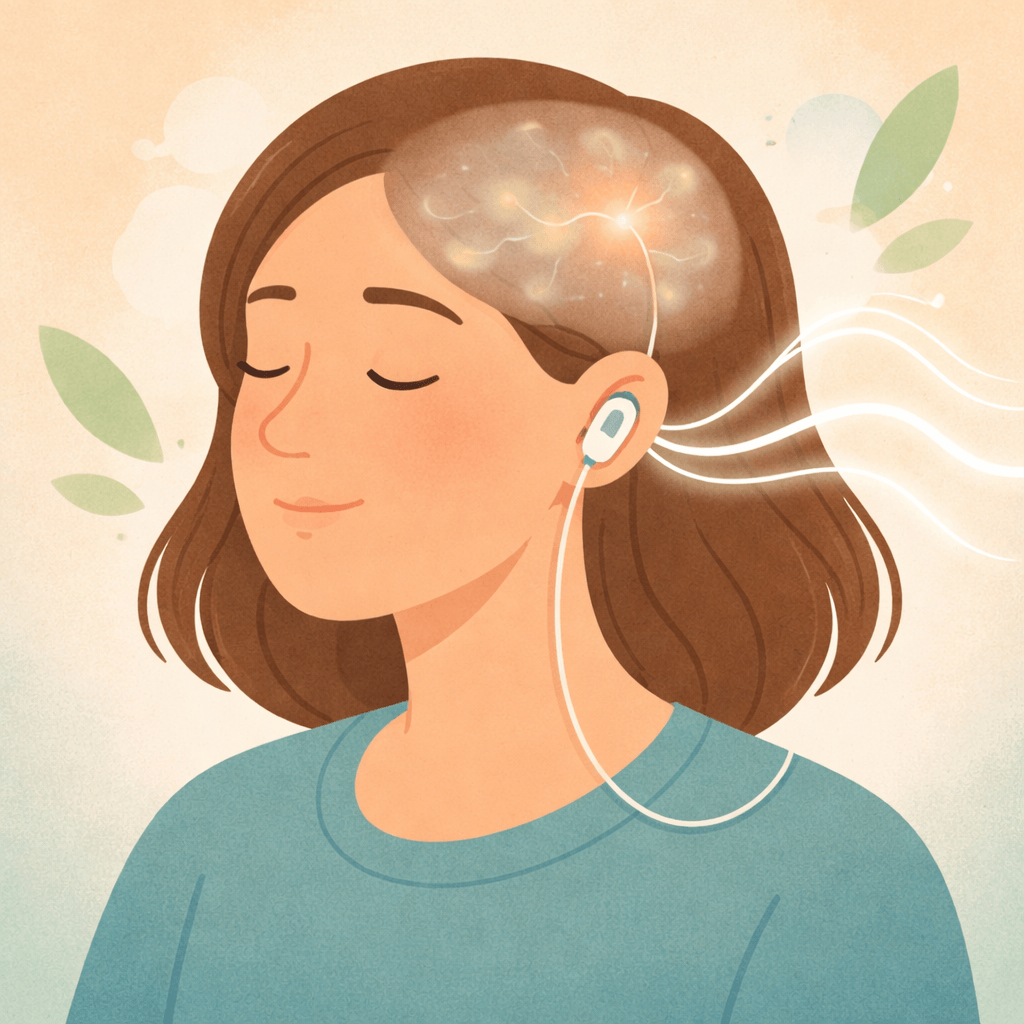
The technique is called transcutaneous auricular vagus nerve stimulation (TA-VNS). In simple terms, it involves placing small electrodes on the outer ear that deliver mild electrical pulses. These pulses stimulate the vagus nerve, a major nerve that helps the brain communicate with the body and plays a role in attention, mood, and sensory processing.
In the study, 10 people with long-lasting smell problems after COVID-19 took part, along with 30 people with a normal sense of smell. Each person received a single 10-minute stimulation session. Before and after the session, participants completed standard smell tests and attention tests.
What did people notice?
After the stimulation session, participants with post-COVID smell loss showed small but encouraging improvements. Some smells appeared stronger or more pleasant, and participants were better able to distinguish between different odours. Improvements were also seen in attention and focus, which many people with smell loss report can be affected as well.
People with a normal sense of smell did not show major changes in smell ability, which is not surprising since their smell function was already intact.
What does this mean for patients?
This was a small, early study and the effects were short-term. The treatment is not currently a standard therapy, and much more research is needed to understand how well it works over time and who might benefit most.
However, the study highlights an important idea: smell loss may involve wider brain and nerve networks. Researchers are increasingly exploring non-invasive ways to influence those systems. For patients who feel stuck or overlooked, studies like this suggest that new treatment approaches are actively being investigated.
Key Takeaway
This small study found encouraging short-term improvements in post-COVID smell loss following a single session of ear-based nerve stimulation. The treatment is not yet part of routine care, but it points to growing scientific interest in non-invasive approaches that target the brain networks involved in smell.
Sources
Ear-based vagus nerve stimulation study
https://link.springer.com/content/pdf/10.1007/s00405-025-09701-5.pdf

